
Part 2. Despite the disparity between available funds and the cost of organic, sustainable food, a large proportion of the community of chefs and bakers here in Portland spend a huge portion of their not so huge income for quality food. They put their dollars where their hearts and stomachs lead them, and tend to hemorrhage money when food shopping.
Portland foodie favorite, the locally-owned supermarket chain New Seasons Market not only supports small local farms and sustainable practices, they give back to the community in many other ways—one of which it’s a providing a haven for folks who love to cook. Both New Seasons and national chain Whole Foods Market give employees a significant discount. Since local and/or organic produce, meat and dairy produced in a sustainable fashion—without growth hormones or non-therapeutic antibiotics, free-range chicken, significantly grass-fed or pastured beef, lamb or pork, seafood that isn’t overfished, etc.—is in general more expensive, that discount makes choosing sustainable quite a bit easier to bear. Not to mention the decent salary, benefits and many of the “perks” that just don’t come easily elsewhere in the food industry…
Jane Thompson, Demo Manager, New Seasons Market Concordia
“I spend another 10 to 15 percent of my total income on food. Right now I get that 20% discount at New Seasons which means I can buy the organic produce and humane meat that was really not practical on my budget before—even though I still bought what I could afford. I don’t mind paying more for sustainable meat and organic produce, but I think that’s because I have a lot of education about food and I know how to cook. Lots of folks either don’t know or they don’t really care—they are just eating to get full. And it is really a really hard choice sometimes. I think most of us who work in food compromise…saving up our money for humane meat and organic produce and filling in the other stuff as cheaply as we can. You need to have enough awareness about food and methods of production to be able to make the smart choices, the ones that will do you and the environment the most good. (A good discussion of what the terms “sustainable”, “humane” and “organic” mean can be found on this site and at the Sustainable Table). I mean just taking the time to read labels in the store is important and realizing that even though there may be strawberries or blueberries in February, they aren’t from around here, thinking about that before you put them into the cart. And knowing that even if you don’t have time to prepare fresh veggies, there are organic frozen veggies, things like that. You hear people saying they can’t afford to buy organic because they’ve got kids…I don’t get that…I mean these are little tiny real people, your children, and you aren’t putting the best food you can afford into their mouths?”
Elsa Ortega, assistant bakery manager at Arbor Lodge New Seasons Market
“Well, of course, the discount helps and I try to shop the sales, but food costs are still really big in our house, around $50 to $70 dollars a week. And we try to eat out once a week; it’s really important to us to try new food and support the local food community, so there’s another $60 or so. I try to buy only organic produce and humane meat, except maybe when I am cooking for a really big crowd. If you are cooking for 20 people, it’s really hard to pay $3.29 for sustainable pork shoulder when you can get at FoodForLess for $1.29 a pound. And food people do tend to cook and entertain more. It can get really expensive, but community and sharing great food is an important part of our lives. Those times I do eat, just for the sake of eating, I have to say I don’t enjoy the food. I just don’t feel good about it.”
Of course, there are only so many great supermarket jobs to go round and that type of work just doesn’t appeal to all chefs and bakers—many don’t want to give up the adrenaline rush, creative satisfaction and crazy camaraderie of restaurant or bakery work that attracted them to the job in the first place, as hard as it may be.
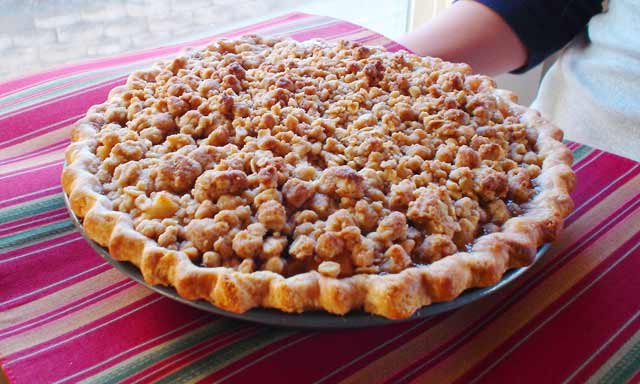
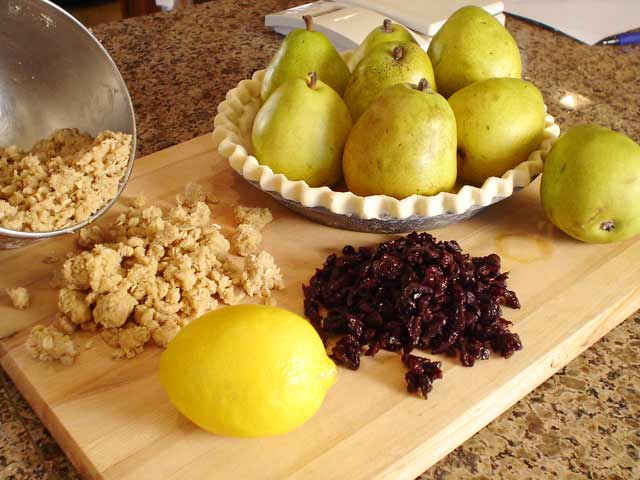
TwoJunes were curious what a made from scratch organic pie would cost. The ingredients alone, with organic pears and cherries, plus other non-organic ingredients cost us $11.23. Add a minimum of one hour labor at $12, you are getting close to a $24 dollar pie. Fruit pies at CostCo range in price between $6.00-$12, and they are quite huge.
See Related: A Fair Artisan Wage: Soldiers in the Sustainable Trenches- Part 1; A Fair Artisan Wage: Soldiers in the Sustainable Trenches- Part 3
Next week: we’ll continue talking to Jane Thompson who ran a specialty bakery in Georgia—not surprisingly, small artisan food business owners do not have an easy road. What does the love affair of middle class America with the box store mean for those of us who have chosen to place food in the center of our lives?

Lisa Bell is a freelance producer, writer and editor. She spent the first fifteen years of her working life as a pastry chef, recipe developer, test kitchen director, food stylist and print editor. She has also taught cooking classes, run a small cooking school, and worked as a food scientist. Nicole Rees currently works as a baking scientist. She is also a food writer and cookbook author specializing in baking science. Her most recent book Baking Unplugged, is filled with simple, scratch recipes that require no electric gadgets beyond an oven.