
Reporting from the Field:
Cronin Family Farm, Gettysburg, South Dakota: It’s cold and wet on the plains; winter is just around the corner. Dan Forgey has been growing crops on this 8500 acre farm for 42 years. About 18 years ago he adopted a no-till practice—when a crop is harvested, its stubble is left untouched through the winter months until the next planting season, at which time seeds are planted right on top of the residue from last seasons crop. This method cuts down on water erosion, wind erosion, and also feeds the soil with the decomposing plant matter.
Seeking a way to improve the soil’s health even further, Forgey decided to introduce cover cropping to his no-till methods. By adding a cover crop of lentils after harvesting his cash crop of winter wheat, he fed the micro-organisms in the soil, which in turn helped build organic matter. Over the years, his results have proved out well – much greater yield of cash crop with a dramatic reduction in the amount Nitrogen inputs needed for the soil.
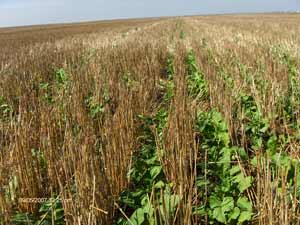
photo courtesy of Dan Forgey
Preserving Nitrogen in the soil is a big concern. Here’s how Michael Dimock, of the sustainably-focused organization Roots of Change (ROC) characterizes in part, its importance from his recent post, The Nitrogen Challenge: “Among those who better understand agriculture and food systems, nitrogen has been known as a core challenge for decades. Sadly, the general public and too many policymakers don’t know, think or care about it. The lack of focus on nitrogen is dangerous for us all.”
Dimock’s article goes on to explain that the management of Nitrogen is a complex matter. While essential for the growing of healthy crops in soil, it takes a tremendous amount of fossil fuel consumption to put the nitrogen back into the soil. Burning Fossil fuels adds carbon dioxide and nitrogen back into the atmosphere, contributing to climate change problems. Run-off from nitrogen fertilizers into waterways is also toxic to fish, and other marine life.
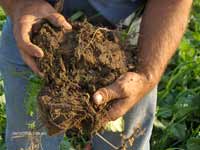
photo courtesy of Dan Forgey
The work that Dan Forgey is doing on his farm using no-till and cover crops, may provide some answers to deal with the Nitrogen issue, at the same time, protecting his land from soil erosion, and improving overall soil fertility, and crop yields.
Stay tuned in the coming weeks for a how-to video detailing Mr. Forgey’s no-till and cover crop practices, as part of our partnership with Sustainable Agriculture Research and Education (SARE), along with other related videos.