Cooking Up A Story


FOOD NEWS

Interviews and talks with experts on the science, politics, and culture relating to food.

Waste: Why Is So Much Food Wasted-2

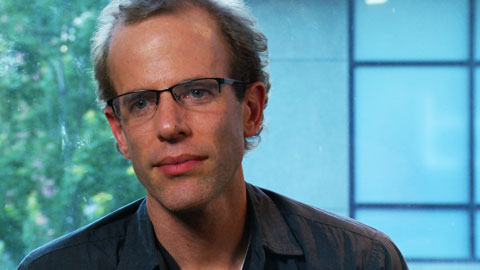
Should food be treated as a precious commodity, or simply a commodity when expedient to just throw out? Jonathan Bloom, journalist, and author of Wasted Food Blog, believes food is too valuable to waste. In this segment, Bloom offers some suggestions for supermarkets on ways they can reduce the tremendous amount of food that gets thrown into dumpsters. He points out that in other generations, food was considered important, and a conscious effort was made to reduce waste. With all the hunger and starvation that occurs, conservation of food may offer an effective, relatively low cost solution toward addressing this problem. Do you think food is too important to be treated as just a commodity? How did your parents view food on the table?


See also: Waste: Why Is So Much Food Wasted-1

Subscribe Subscribe To Us By RSS

Subscribe Subscribe By Email

Waste: Why Is So Much Food Wasted?

Did you know that around 40% of the food we produce gets thrown out? A whopping 40%! How did that come to be? I know we're considered to be the 'throw-away' society - if it breaks, tears, or tarnishes just buy a new 'one' - but food? This really surprised me, with the cost of food rising and with the economy what it is, more and more people are not able to buy even the simplest, healthiest foods.

Jonathan Bloom, a journalist, had an epiphany while volunteering at the DC Central Kitchen 3 years ago. The result was his blog Wasted Food and his upcoming book on the subject. From the farm to your kitchen, Mr. Bloom discusses what he has uncovered from his research of food waste throughout the industrial nations.


Did you have any idea it was this bad? What do you think you could do different? I would love to hear your ideas.

See also: An Abundance of Food, Wasted

Subscribe Subscribe To Us By RSS

Subscribe Subscribe By Email

Notice To All Sites Embedding Cooking Up a Story Videos


To those of you that have not already been contacted directly, this notice is to inform you that the Brightcove players that you may have embedded on your site to play Cooking Up a Story videos will no longer be active after December 16, 2008.

They have been our player (and a wonderful player) for almost 3 years, and as Brightcove transitions to a new player platform, we too are moving ahead in a highly focused direction. As you may know, we are developing a brand new, state of the art site to house our existing and new content as we focus on building a vibrant and interactive community on cookingupastory.com.

For all those wishing to continue to share our videos, please send me an email to obtain your custom embed code, or feel free to obtain the code directly from the new player on our site.

Thanks for your continued support. Happy holidays!

Fred
fred(at)cookingupastory(dot)com

Subscribe Subscribe To Us By RSS

Subscribe Subscribe By Email

OPB Calling: Think Out Loud

Oregon Public Broadcasting (OPB) new radio show, Think Out Loud, is an informative one hour show that delves into the Portland, Oregon politics, culture, and leading edge issues of the day, sometimes covering topics about food and sustainability. I just received a notice from them that they will be having an interesting topic this Thursday, November 27 at 9am (PST) on KOPB radio that may be of interest to listeners.

Here's what they sent us (with a slight modification for public display):

Oregon Public Broadcasting and Think Out Loud will be offering a Thanksgiving "Best-of Food" special set to air on Thursday at 9am. The radio program will focus on the policies, politics, recipes, and realities of eating local. Hosts Emily Harris and David Miller talk with a snout-to-tail chef and a Wallowa cattle rancher, a master preserver and a blogging canner, and Harry MacCormack, the founder of Oregon Tilth, who says 30 percent of our food should come from where we live.

In addition to the on air portion, Think Out Loud will have an online discussion at where listeners can add (including much loved Thanksgiving recipes) to the conversation.

Think Out Loud is a call-in and online radio program that airs weekdays (for channel listings, please visit ) at 9am and again at 9pm.

Subscribe Subscribe To Us By RSS

Subscribe Subscribe By Email

Calling All Friends of Cooking Up a Story

As many of you may know, this is a unusual post from us, as it does not involve any of our Shows directly. Instead, this post is a call for your active participation to help us better understand you, and how we can continue to provide unique and valuable content worthy of your attention. Please take a couple minutes of time to answer this brief survey (only 3 questions): CUpS Survey

Thanks for your continued support!

Subscribe Subscribe To Us By RSS

Subscribe Subscribe By Email

A City Looks Toward Defining Its Future

Damascus, Oregon (population: 10,000) ponders how to integrate existing urban agriculture into its future urban fabric.

City of Damascus, Oregon population sign
Photograph courtesy of Tom Gerendasy
Written by Fred Gerendasy

Damascus is located about 20 miles southeast of Portland, incorporating the surrounding communities of Damascus and Carver to become a city in 2004. It occupies roughly 10,000 acres (16 miles); now designated inside the Portland Metropolitan urban growth boundary. Comprised of a few food producing urban farms; some hobby farms situated on 10 acre plots; a smattering of urban refugees, nurseries, and other small commercial enterprises; the city is developing a comprehensive master plan to prepare for its anticipated population growth upon build out, (somewhere) between 20,000 - 60,000 new residents.

hillside view of Damascus, Oregon

An important part of the master plan will address the issues of how to preserve their urban farms inside the urban growth boundary. I attended a workshop that brought together community leaders, city and county planners, local farmers, Portland Farmer's Market representatives, and others, to listen and discuss ideas how to preserve and promote urban agriculture against the backdrop of future commercial and residential development.

home construction in Damascus, Oregon

Larry Thompson, from Thompson Farms, a successful urban farmer whose 120 acre farm is located nearby, spoke in part to the importance of environmentally friendly farming practices being necessary inside an urban area. Uncontrolled runoff, and the use of pesticides and other chemicals in proximity to homes is not a viable option. Using sustainable farming practices, he grows over 40 types of food crops through much of the year, and direct markets to farmer's markets, farm stands, and pick-your-own services.

One of the interesting conversations I experienced occurred outside the larger group. Speaking with a produce manager of a local supermarket chain, his desire was to help form a community farmer cooperative to market a wide range of food products to local supermarkets including the big retailers like Safeway, Albertsons, and others. His belief was that fresh, locally produced foods need not cost any more to the consumer if a coordinated system involving farmers, distributors, local retailers, and an independent certification agency, could be put in place to maximize regional efficiencies of scale and production. Presumably, the higher costs of growing foods using sustainable practices, and insuring a fair price to the farmer, may be offset through major reductions in transportation costs. As he pointed out to me, a full truck carrying 28 pallets of produce, costs about $100 per pallet to ship from California to Oregon ($2800), and returns the same distance home, empty!

(more...)

Subscribe Subscribe To Us By RSS

Subscribe Subscribe By Email

FOOD NEWS LIVE: National Farm To School Movement


From our first live broadcast:
If you're not familiar with the farm to school movement, it's all about getting fresh, clean, good food to our kids in school and help create new markets for local farmers. It started as a grassroots movement and has spread across the country. Get in on the conversation with Deb Eschmeyer of the National Farm to School Network, and hear just how far our food system has strayed. Two surprise nuggets (no, not chicken nuggets): a school age child that tastes watermelon for the first time, and knows that flavor only from the bubble gum he chews; the senate in Washington, that has their own organic kitchen with access to fresh, and locally grown foods, but not a single public school in Washington D.C that has an operating kitchen. This is a call to arms, and a call for change in direction, to help our kids grow into healthy adults. If we are to place country first, let's think first about promoting the welfare of all children.

Subscribe Subscribe To Us By RSS

Subscribe Subscribe By Email

Ken Meter: Building A Local Food Economy: Part 3


This final installment, Ken Meter expresses optimism for the future of local food economies, but a healthy respect for the challenges that lie ahead. Interestingly, Ken Meter suggests we choose foods that are healthier for us to eat as a guide toward supporting local food economies. By contrast, Michael Pollan argues we are too obsessed as a nation with food being eating largely on the basis of health, ignoring other important reasons for eating, such as pleasure, community, culture, etc.. Are they in disagreement? Oddly, I think, not. Pleasure in Pollan’s terms means food that not only tastes good, but also feels good, after we eat it. Ken Meter speaks in terms of health, but the types of food, their seasonality and localness also correspond more closely with better tasting foods, and pleasurable eating. Of course, community, and culture rest comfortably in both camps. After viewing the Michael Pollan interviews, what’s your take on how the two interviews compare?

Related: Complete Michael Pollan Interviews

Subscribe Subscribe To Us By RSS

Subscribe Subscribe By Email

Ken Meter: Building A Local Food Economy: 2

Building a local food economy also depends upon retaining local farms, and encouraging the development of new ones. In part 2, Ken Meter outlines the problem with the diminishing availability of affordable farmland. He also shares a couple of stories about two enterprising community efforts: one that makes land more accessible for farming; the other, that helps farmers and local businesses benefit by partnering together.


Related: Real Wealth Nations: Creating A Caring Economics (book);
Farmland Information Center (find out about farmlands in your State);
Leopold Center For Sustainable Agriculture—Buying Food Grown In And Around Black Hawk County Keeps Millions Of Dollars In Local Economy
University Of Northern Iowa Local Food Project

Subscribe Subscribe To Us By RSS

Subscribe Subscribe By Email

Ken Meter: Building A Local Food Economy: Part 1


As the pendulum has swung toward a globalized economy, more people are realizing the huge costs associated with the singular pursuit of maximizing profit, employing cheap labor, and ignoring environmental concerns. A shift is underway to promote sustainable local economies, in part, a necessary response to increased fuel costs, and global warming threats. Creating a local food economy means valuing the production of healthy foods, creating sustainable markets for farmers who produce the food, and livable wages for farm workers who toil in their fields. In part 1, Ken Meter, of Crossroads Resource Center, defines a strong food system, and why it’s so important.

Related: Kitchen Literacy- 1; Community Alliance with family Farmers;
Bill McKibben: Deep Economy

Subscribe Subscribe To Us By RSS

Subscribe Subscribe By Email