
Community Supported Agriculture (CSA) offers a holistic approach to the production of sustainable food grown in urban areas. In this story, we learn of one urban farmer who successfully uses the CSA model to produce long-term sustainable crops that are fresh, cost efficient to produce, environmentally friendly, and that offers local members a stake in the harvest crops.
Have you gone to your local farmer’s market lately and tried to make your way through the bustle? Have you noticed at the grocery store they sometimes highlight items from a local grower? Ever notice in growing numbers the restaurants offering dishes made from ingredients grown locally? I have. And it seems to be a growing trend.
I grew up in farm country (Iowa). Summers were great. I remember going to a nearby corner where a local farmer always sold grocery bags full of corn just picked that morning. I also remember the great taste of tomatoes in the summer. In fact, I only remember eating freshly sliced tomatoes in the summer. This was before food was imported from around the world or grown primarily in hothouses. Now it seems there never is a specific season for any certain fruit or vegetable. You can practically get anything any time of the year. But the flavor isn’t always quite the way I remember it. That’s part of the reason I became interested in buying locally, and buying by season.
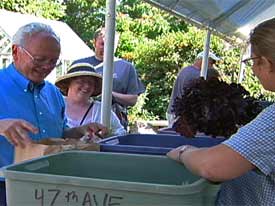
It was a natural fit for me to meet Laura Masterson, who runs a small local farm. It was fascinating to watch her zoom from restaurant, to farm, and back home where members pick up the weekly harvest. And she is not alone. I know there are thousands of small farmers across the country (and many around the world) who are facing great odds day to day, producing and selling through a Community Supported Agriculture program. Laura brings up many important points to think about. Is there a future for the small farmer near urban areas? If Oregon leads the nation in slowing urban land development, how well are other areas handling these issues? How important is it to preserve a direct connection between the land, and the food that we eat?
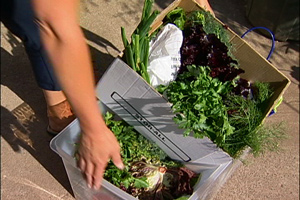
Recipes from the show: Oven Roasted Tomatoes & Herbs; Spanish Eggplant Salad; and Caponata Pasta.
Most of the videos featured on Cooking Up a Story were produced, filmed, and edited by Rebecca Gerendasy. Fred Gerendasy contributed as a writer to many of the posts and occasionally as the interviewer. Visit Rebecca Gerendasy Clay – Art and Fred Gerendasy Photography to see their current work.