Topic: Food Stories

Short documentary stories— told in the voice of the subject—and filmed on location

Raised On Grass: Pastured Fed Animals

Cooking Up a Story: Stories

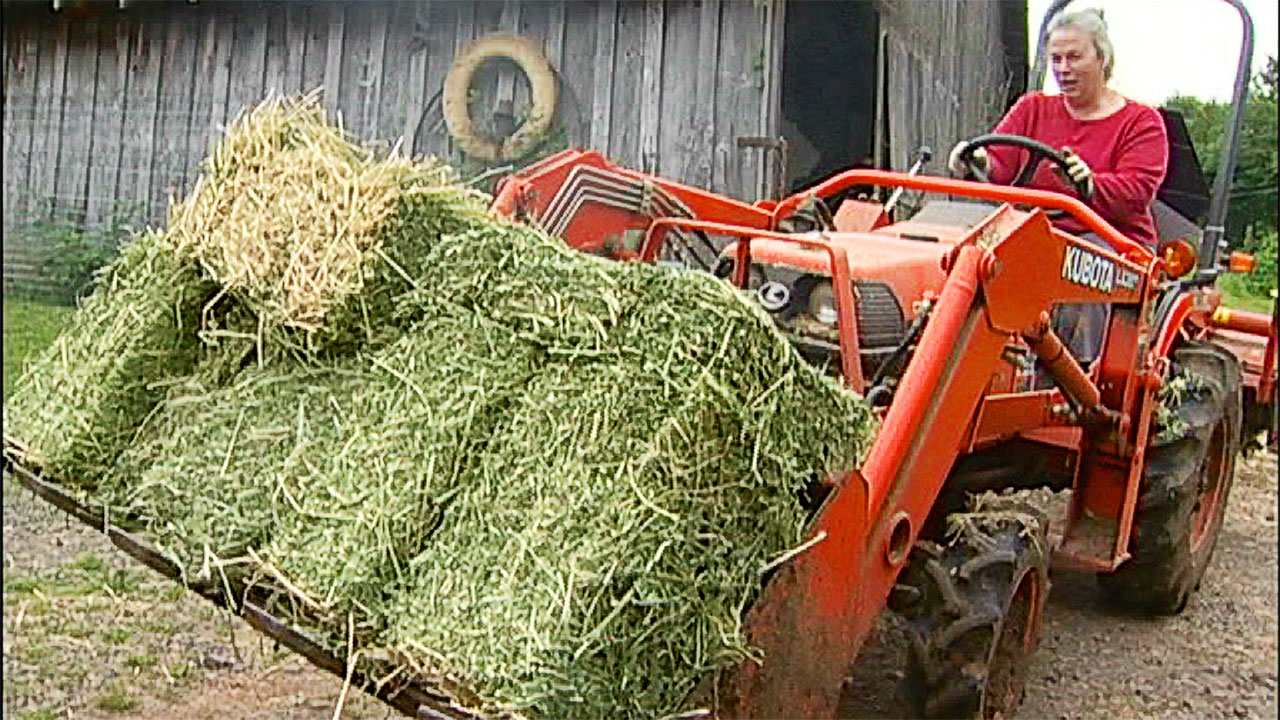
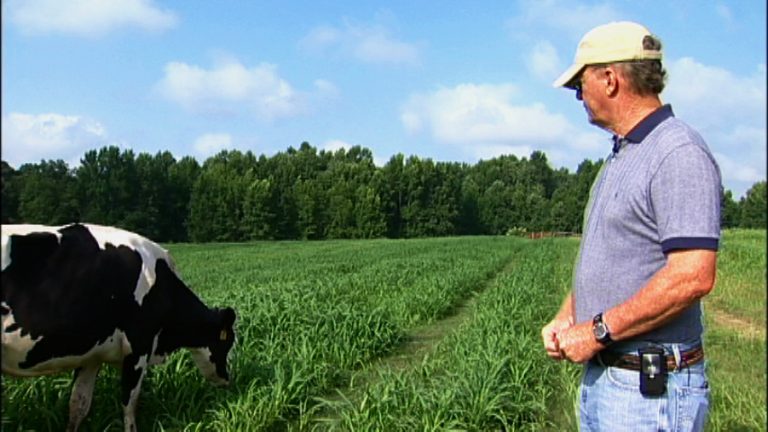
New to the life of farming, a middle-aged couple make a career change to becoming sustainable farmers. First mentoring under Joel Salatin, they now raise pasture fed cows, pigs, chickens, ducks, lambs, and sheep.

I started to really think about the food the animals I ate were fed, after I saw “King Corn” and talked to Curt Ellis.

As I was breaking down the equipment and packing it all away, I said, more or less to out loud to myself, ‘I ought to do a story on pasture fed cows’. Curt was right there, responding, ‘You should!’. I nodded my head, thinking, Okay, I’ll look into it.

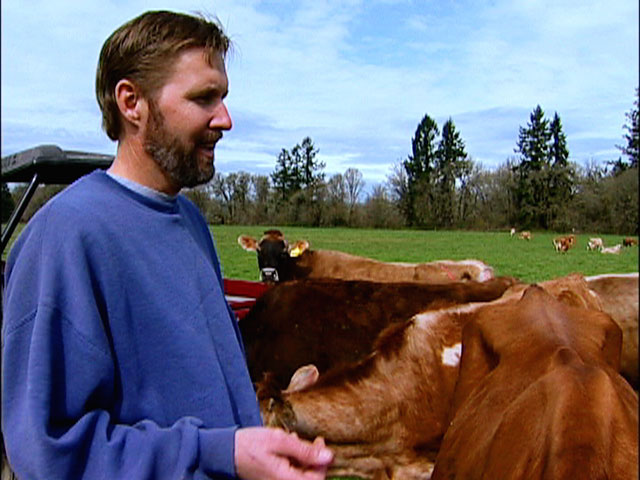
As the Jongles look on, their animals graze on the pasture grassThe looking didn’t come right away. But evidently the forces in the world were at work, for not too long after, I finally started reading “Omnivore’s Dilemma” . The second chapter was all about Michael Pollan visiting Polyface Farm where Joel Salatin raises his animals as humanely possible and on pasture. Not concrete, not alongside thousands of others, not full of injections, and not 100% grain fed. Sounded like a good idea to me. But Mr. Salatin was nearly 3,000 miles away. It wasn’t going to work, at least not right away. In the meantime, I started to read his book, “You Can Farm,” and I liked what he was doing and wanted to learn more.

In the meantime I met with Michele to talk about films and food. I mentioned to her I wanted to do a pasture fed story and she immediately lit up and told me about the Abundant Life Farm
buyers club, for that’s where she got her meat, and it was all grass fed and pasture raised.

chickens feeding in the open pastureSo I gave the Jondles a call and found quite a story. Not Joel Salatin’s, mind you (but they did mentor under him!), but their own story that was quite compelling. What a wonderful environment they’ve created for their animals. The pigs get to root under brush and tree, the chickens get to scatter, and the cows and lambs run at will. In fact, when Marilyn opened the gate for the cows to go to a fresh area of pasture, they ran and kicked up their heels! What a sight that was. I’m not an animal psychologist, but these are happy cows!

A website that is dedicated to news and facts surrounding grass fed food is EatWild. Yes, pasture fed meat is more expensive, but I believe it’s healthier to eat, and more humane for the animals as well.

Check out the recipes from this show: Mom’s Potato Salad; Easy Baked Chicken

—Rebecca

Share and Enjoy:
  • email
  • Twitter
  • Facebook
  • Digg
  • del.icio.us
  • StumbleUpon
  • Reddit
  • FriendFeed
  • Google Bookmarks
  • Netvibes
  • Ping.fm
  • RSS
  • Yahoo! Bookmarks

Related Posts:

Posted in Food Stories | Tagged , , , , , , , , , , , | 13 Comments

The Art of Food Photography

Cooking Up a Story: Stories

The pictures can be tantalizing. Some even cause us to stop and stare. Join us for a behind the scenes look at a food photographer and his team, as they create sumptuous images out of fresh ingredients that seem to jump off the page.

We’re surrounded by images through billboards, television, magazines, the internet…the list is long. And since food is a part of everyone’s life, in some form or another, many of those images are about food. Some are blah, some are tantalizing, and some go unnoticed. But the ones that do grab my eye make me wonder and I begin to dissect. Why did they choose that background, who designed the arrangement, how did get that cheese get to look so yummy, and the lighting, how was it lit? These questions lead me wondering exactly what is happening outside of that frame.

I visited a food photographer’s studio to find out for myself. And boy, was it an education.

ed gowan cherry tart pie onion tart

The day I spent at Ed Gowans Studio, he was doing a shoot for the Pear Bureau Northwest. In my naiveté, I thought everything was done by the photographer. Wrong. It’s a team effort. Besides the photographer there is a food stylist, or two, and the client pulled up her sleeves and was involved too. Each food item was prepared from scratch on site. Everyone put their 2 cents in. They took as much time as was needed for each shot, and then moved on to the next. It was a full day. Food that is prepared for filming purposes are not intended to be eaten. Food photography is one of the most difficult specialties of commercial photography, getting food to look just right on camera involves considerable skill and experience to get it right.

Ed Gowans with Client Christie Mather of the Northwest Pear Bureau Examining Image Monitor

I feel a kindred spirit with people like Ed and his team. They’re not just technicians, they’re artists. While there are so many images we are bombarded with daily, when it comes to images of stunning beauty, and artistry, there can never be enough!

Recipes from the show: Pear Bread; Ed’s Tangy Eggless Caesar Salad

—Rebecca

Share and Enjoy:
  • email
  • Twitter
  • Facebook
  • Digg
  • del.icio.us
  • StumbleUpon
  • Reddit
  • FriendFeed
  • Google Bookmarks
  • Netvibes
  • Ping.fm
  • RSS
  • Yahoo! Bookmarks

Related Posts:

Posted in Food Stories | Tagged , , , , , , , | 11 Comments

Organic Dairyman: Director’s Cut

CUpS: Stories

Rosie (and the girls), 12 years old and still milkin!

This is the director’s cut version, a story about Jon Bansen, a 3rd generation Oregon dairy farmer who switched from conventional to organic dairy farming in 2000. The Double J Jersey 450 acre farm is located about 20 miles west of Salem.

Originally, this story was divided into two parts, his roots in agriculture as a 3rd generation dairy farmer (Organic Dairyman: A Family Tradition), and his life after converting to an organic practice (Organic Dairyman: The Farmer). More than just the combining of both parts into one, it also contains a new open, and the pacing throughout is more consistent with the slow pace of his natural environment.

It’s impossible to have a conversation with Jon Bansen without asking about his favorite cow Rosie. She’s now 12 years old (she was 9 in the film), and for an active producing cow, well beyond the average productive years for a dairy cow. And yet, Bansen proudly shares, Rosie is producing 120% of capacity compared with the rest of his 165 jersey cow herd. By contrast, Bansen explains, the average conventional dairy cow will last about 4 years, and during their first two years, will not produce any milk at all. To Bansen, organic cows are healthier, and remain on average, productive longer, than their conventional counterparts because of the differences in how they are treated, and their access to open pasture for grazing.

Organic milk offers additional advantages to consumers in the form of higher nutrient levels, such as Omega 3 fatty acids; better taste (I’ll personally vouch for this one); and is free of antibiotics, and growth promoting hormones. In conventional dairy operations, cows often do not have access to pasture for grazing, instead they spend much of their lives in confinement lots, and are fed conventional feed that according to Bansen is both unnatural, and stressful to their stomachs, and to their overall lives.

Just recently, the USDA enacted tougher requirements for organic livestock practices, to ensure that animals receive a considerable amount of their food from pasture grass, and lead more natural lives, without undue confinement. Organic agriculture, and by extension, organic livestock management embraces a holistic view of farming that seeks to work with nature, not against it. The new access to pasture requirements will likely effect more organic dairy operations in the West and Southwest where larger herd sizes (300+ cows) will no longer be economically viable due to the amount of grazing land needed . The majority of organic dairy farms are located in the Northeast and Midwest, and contain much smaller herd sizes. Read More »

Share and Enjoy:
  • email
  • Twitter
  • Facebook
  • Digg
  • del.icio.us
  • StumbleUpon
  • Reddit
  • FriendFeed
  • Google Bookmarks
  • Netvibes
  • Ping.fm
  • RSS
  • Yahoo! Bookmarks

Related Posts:

Posted in Food Stories | Tagged , , , , | 5 Comments

Community Egg Co-op

Cooking Up a Story: Stories

Have you ever attempted to raise chickens yourself? Bread, beer, fruits and vegetables all taste noticeably better when fresh. Well eggs do too! For Patrick and Holly, they were already true believers having raised chickens before. This time they wanted to raise more chickens than ever before—not just for themselves but also to sell to others. Through serendipity and the community coming together, they were able to pull together a team of 14 people to take care of 30 chickens to form their own CSA, Eastside Egg Co-op.

There are so many benefits to raising chickens. They are a great addition to any garden, they clear out whatever area of land defines their boundary, and they also leave their nitrogen rich manure for the next round of plantings. The eggs from these naturally raised chickens are higher in the good omega-3 fatty acids than eggs produced from factory farms, not to mention being fresher. Typically, eggs from the supermarket are at least 2 weeks old before they even reach the shelf.

Eastside Co-op and Volunteers

If this is something you think you’d like to try, find out first if chickens are allowed where you live. If yes, like Patrick says, make it happen!

If you have some tips to share, I’m all ears! This is something I’m considering doing myself.

—Rebecca

Share and Enjoy:
  • email
  • Twitter
  • Facebook
  • Digg
  • del.icio.us
  • StumbleUpon
  • Reddit
  • FriendFeed
  • Google Bookmarks
  • Netvibes
  • Ping.fm
  • RSS
  • Yahoo! Bookmarks

Related Posts:

Posted in Food Stories | Tagged , , , , , , , | 17 Comments

Dutch Oven Gathering: Dog Gone Good!

Cooking Up a Story: Stories

Cookout at a Dutch Oven Gathering. It’s a D.O.G., and if you have never been to one before, you’re in for a treat.

During the Fall of 2005, my husband and I visited a nearby sporting goods store, looking for some camping gear. It was a beautiful day and my window was down as we drove into the parking lot. My nose caught some wonderful aromas—somebody was cooking something, somewhere. I spied some ez-ups near the entrance of the store, and so we starting talking to the folks putting together this cooking demonstration.

A Dutch Oven Gathering of Food, Friends and Outdoor Cooking Gear

What we discovered was a group of very dedicated Dutch oven cookers (I later found out that the store invited them over to demonstrate cooking on cast iron). At my home, the cast iron skillet never leaves the stove top! It’s always being used to cook something. But I’ve never cooked in a cast iron pot—a Dutch oven—inside, let alone outdoors. I was interested. After our shopping, we stopped by to talk to the cooks (there were 4 or 5 of them) and we tasted their fantastic creations.

As we chatted I learned that they had started a group and got together to cook and share food outdoors during each of the 4 seasons, come rain, snow, or too much sunshine. Even in the winter? Yup, even in the winter. Their love for the Dutch oven prevailed. I took a mini-flyer about their group, thinking this was something I’d like to do too.

Fresh Dutch Oven Baked Cinnamon Pull-Aparts

Months later I started filming for Cooking Up a Story, and I remembered my Dutch oven experience. I found the flyer and I called about filming their next DOG. The next one was scheduled for the first weekend in March. It had been a beautiful early Spring day, but as the sun set, the temperature gave a quick reminder winter was still close by. Nothing deterred these folks. Most were old hands at it. Up went the tables, charcoal was lit, ingredients were put together, and into the pot they went, where the magic happened. As the ‘food table’ grew and people ate, one of the cooks said you’ve got to put that camera down and eat. As I hesitated he said, There’s always time for food. Y’know, he was right. I stopped and filled a plate and was amazed, again, at the variety and the taste.

Inside or out, it works.

Recipes from the show: Peach Cobbler; Columbia River Mud Pie

—Rebecca

Share and Enjoy:
  • email
  • Twitter
  • Facebook
  • Digg
  • del.icio.us
  • StumbleUpon
  • Reddit
  • FriendFeed
  • Google Bookmarks
  • Netvibes
  • Ping.fm
  • RSS
  • Yahoo! Bookmarks

Related Posts:

Posted in Food Stories | Tagged , , , , , , , , , | 9 Comments

Making Berry Delicious Pies

Cooking Up a Story: Stories

Willamette Valley Marionberry Frozen Pie

Willamette Valley Marionberry Frozen Pie

Those frozen pies that seem to fill the supermarket frozen display bins, where do they come from, and how are these frozen fruit pies made. We discovered one company, the Willamette Valley Fruit Company, in our own backyard that processes fresh picked berries, and within hours, the fresh berries are frozen, and made into frozen pies for shipment. The pie crusts are made from flour and whole ingredients, if you are not able to make your own fresh fruit pies at home, this may be the next best thing. Check out these related recipes that are perfect for this holiday season: Holiday Pecan Pie with Scotch; Zesty Marionberry Sauce.

Frozen Berries on Conveyor Belt

Frozen Berries on Conveyor Belt

Pie Dough Being Mechanically Flattened

Pie Dough Being Mechanically Flattened

Frozen Pies Being Completed By Hand

Frozen Pies Being Completed By Hand

Close Up of Frozen Pie Being Prepared

Close Up of Frozen Pie Being Prepared

—Rebecca

Share and Enjoy:
  • email
  • Twitter
  • Facebook
  • Digg
  • del.icio.us
  • StumbleUpon
  • Reddit
  • FriendFeed
  • Google Bookmarks
  • Netvibes
  • Ping.fm
  • RSS
  • Yahoo! Bookmarks

Related Posts:

Posted in Food Stories | Tagged , , , , , , , , , , | 4 Comments